I thought splitting chapters was painful. Splitting the book in half is much worse. The book one spreadsheet is updated (for Tom & Luke; not sure I need the others). That was relatively simple: I deleted all the tabs past C15 (which is now C12). Combining chapters was harder because I needed to be sure I didn’t lose any data and deleting C02, C03, and C04 (which are all now C01) broke the inter-tab links on C05. Etc…
Prologue added and chapters one and two are “done”, yet again. About 6K words each (5,985 and 5,729; the prologue is tiny at 724).
- The “old man” problem is fixed. They’re now checking their phones for news. I need to explicitly leave the phones in the truck (chapter three issue).
- I’ve yanked as many quote attributions as I think possible without rendering it a confusing mess. There are still a few too many “Luke”s and “Tom”s, but when someone does something, “he” can be ambiguous.
- Luke tries to get help text/details from his character sheet and fails. This comes up frequently at the start of LitRPG books so the author can explain the System. No explanations from me, but them not trying was an issue.
- Smells and a bit more description added. It could use more.
From my notes for chapters three and four:
- Moar cows (lots of ranches). What are gelded male cows called? Steers? Thank you, Clover Meadows Beef: A steer is a male bovine that has been castrated and is primarily for beef. A cow is a female that has had at least one calf. A heifer is a female that has not had a calf yet. A bull is an intact male used for breeding. If you keep reading, you’ll learn that a steer can also be an ox – trained as a draft animal; it’s still a steer but it’s not (immediately) destined for the table. We’ve already discussed “polled” bovines (genetically without horns). The System will fix that, which will make cows difficult to milk because you can’t trap their heads in whatever those head trapping things in barns are called if there are horns sticking out. Cut them off? Do they grow back?
- Moar fences (there are zero, now, and there are lots and lots of fences, irl).
- Someone sees them. We saw very little traffic, but someone will be around somewhere. Just throw it in where it’s convenient. A short POV. That person can show up much later in the consolidation at Kier (chapter 24, which is end of book two).
- Start building the “more people means more monsters” concept. This is the reason that Kier and surrounds haven’t been wiped out. It will also be why large sections of bigger (bigger than Kier, pop 300, but still on the small side) towns have been wiped out. However, driving through some of these smaller towns (e.g. Sturgis on the way out and Belle Fourche on the way back), I noticed that modern infrastructure is both extensive and sturdy. A YUGE herd of monster-ized buffalo stampeding through Belle Fourche wouldn’t affect much. Stop lights and power lines would come down, but with the electricity out, who cares? The downtown buildings are all brick (no trees; couldn’t use lumber back in the day). The steel industrial buildings would probably collapse, but that’s not needed-to-live infrastructure. I suppose a trailer park would make a good target. A “tornado of buffalo”? And there’s just so much of it. Monsters explicitly trying to destroy infrastructure would take weeks, months even, of rampaging to render it uninhabitable (see also bombing campaigns against cities).
- Describe the bleakness in some detail. I suppose that it’s an advantage to the setting. No verdant forests for Ayla to go on about while boring readers to tears. To be fair, I’m sure some readers enjoy learning about the medicinal uses of every plant – and descriptions sufficiently detailed to identify them on one’s own. They’re not going to read my book, anyway.
- Harvest is not the big deal I’ve been making it out to be. There are farms, but not that many of them. It’s mostly ranches in West River, especially up north. The cattle drive is more important. It’s clear that the ranchers will know what to do. The fields are ginormous so they’ve got to be rounding cows (bovines? beeves? steers?) up and moving them around on a regular basis. The distance is the difference – and the fences, so many fences. They’ll need to use the roads.
- Coulee. That word can be used for the “sometimes a creek, but mostly just a dry gully” things around South Dakota. I’m leaving the Tom & Luke references – including by the narrator – alone, but they will learn the word eventually. The Laird found it.
- There are also lots of gullies. Conveniently, the same Leaping skill that allows Luke to easily jump fences will allow him to jump these, too. Tom’s going to have a harder time. I think Luke will get the skill after plowing headfirst into a fence. I’ll be nice and make it a horse fence, not a cow fence (i.e. not barbed wire). Maybe.
- Did I mention that there are a lot of fences partitioning the bleak, gully riddled prairie? It’s really a massive oversight in their travels.
New chapter three is 4K words. Chapter four is only 3K. Chapter five is 5.9K. Chapter six is 5.5K. Chapter seven is 7.4K. Chapter eight is only 4K. Chapter nine is big: 8.7K (eight and nine are the formerly troublesome chapter 18). Chapter ten is 6.9K. Chapter eleven is 4.9K. Chapter 12 is 4.5K. Looking at that, if I need another chapter, three and four could be combined.
Chapter three already had descriptions and smells. Still 4K. Lots of quote attribution ripped out, so I’m lucky it didn’t get shorter.
I think chapter four needs an off-screen level up for each of them, but that will screw with the ending, so it remains as-is. Maybe add some skill level-ups.
That’s enough for today.
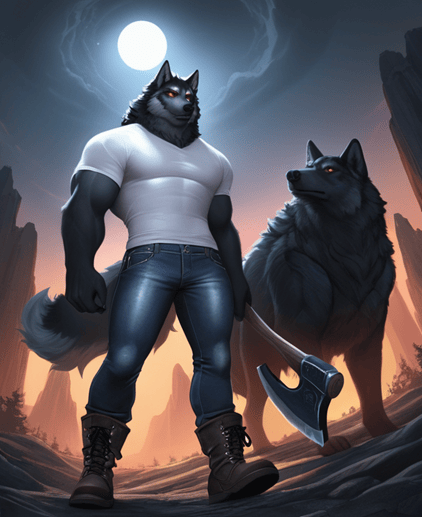
Rejected Cover: That’s a square one. Making it rectangular would cut off interesting bits. Tom’s also not black and he’s male. I do like it, though.

